House Clearance Kenton: Recycling and Sustainability
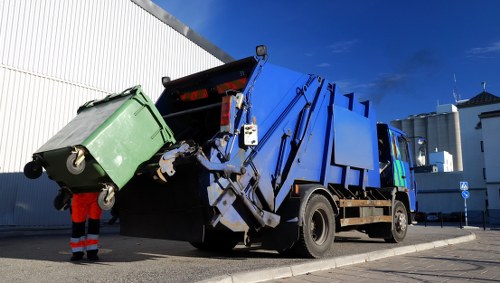 At House Clearance Kenton we place environmental responsibility at the centre of every clearance. Our Kenton house clearance teams work to reduce landfill, maximise reuse and support local circular-economy initiatives. This page explains our approach to sustainable rubbish removal, our targets for recycling, and how we link with borough recycling schemes, transfer stations and charity partners. Whether you search for Kenton clearance services or house clearance in Kenton, our commitment remains the same: clear spaces responsibly and reduce the carbon footprint of every job.
We set a clear recycling percentage target for all removals: 75% recycling and reuse of recovered items by weight across routine house clearances within the next five years. This target is a practical, monitored goal that guides our sorting, segregation and reporting. To meet it we track material flows from customer premises to transfer points and partner re-use outlets, and we publish internal progress that drives continuous improvement.
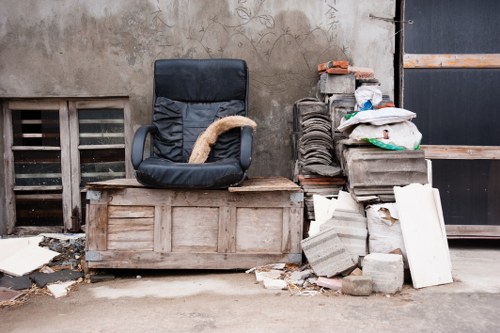 Local boroughs influence how waste is separated in Kenton — the area sits close to parts of Brent, Harrow and Barnet where separate collections for paper, card, glass, plastics, food and garden waste are standard. We align our on-site sorting with those civic schemes so that materials leaving a clearance integrate smoothly with council-led recycling streams. By mirroring the boroughs' approach to waste separation we ensure recyclable materials enter the correct downstream process rather than being contaminated or diverted to landfill.
Eco-friendly waste disposal area and local transfer stations
When we remove items we prioritise reuse and recycling before disposal. We regularly use nearby civic transfer stations and recycling centres that accept segregated loads, including bulky household goods, metal, wood, and mixed recyclables. Our teams consolidate loads to reduce journey numbers, and we choose transfer points that have strong reuse and materials recovery facilities. Commonly used local sites include borough reuse centres and civic amenity sites operated by neighbouring councils — these facilities help divert high volumes from landfill and feed materials into legitimate recycling chains.
 Our process includes a preliminary on-site assessment to identify items suitable for direct reuse (furniture, working appliances, fixtures) and materials that need specialist recycling (electronics, mattresses, untreated wood). Items suitable for rehoming are separated and collected to go directly to charity partners or social enterprises wherever possible; this not only reduces waste tonnage but also supports community needs and extends product life.
We maintain formal and informal relationships with a range of organisations to ensure reuse is maximised. These include local charities, re-use shops and community projects that can redeploy household items quickly. Our partnerships are managed to ensure transparency and traceability — every donated or transferred item is recorded so we can demonstrate how much material was diverted from landfill.
Partnerships, sustainable practices and low-carbon vans
To achieve our sustainability goals we actively partner with charities and social enterprises. Key types of collaborators include:
- Local charities — community reuse shops and charities that accept furniture and small household items for resale.
- Charity recycling partners — organisations that refurbish and distribute goods to people in need across boroughs.
- Specialist recyclers — licensed waste transfer and processing facilities for electronics, mattresses, and hazardous components.
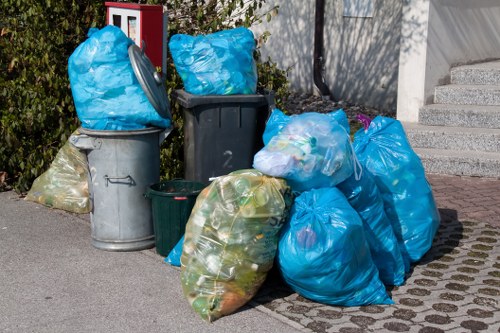 Our vehicle fleet is also part of our sustainability strategy. We operate a growing number of low-carbon vans including electric and hybrid models, and we optimise routes to minimise mileage and emissions. Drivers are trained in eco-driving techniques and we invest in regular maintenance to keep fuel efficiency high. Where diesel vehicles are temporarily required, we use Euro-6 standard engines to reduce NOx and particulate emissions.
 Beyond fleet choices we encourage practices that reduce environmental impact at every stage: segregation at source, repairing rather than replacing where possible, and donating viable items to local causes. We also collaborate with borough initiatives that promote composting and food waste diversion, ensuring organic fractions are correctly routed when discovered during clearances.
As part of our sustainability reporting we publish aggregated figures on diversion rates, reuse volumes and transport emissions. This data informs our continuous improvement programme and underpins our pledge to reach and sustain the 75% recycling target. We adapt to the evolving waste management standards used by Brent, Harrow and Barnet, and our staff attend regular training on waste classification and cross-borough collection rules.
In practical terms, if you choose our Kenton house clearance or any Kenton eco clearance option, you get a service that is both efficient and accountable. We use clear tagging and manifests to make sure every item's disposition is documented — whether it goes to a local reuse shop, a licensed recycler or to a certified transfer station. This traceability reassures customers that waste has been managed responsibly.
Our approach to sustainable rubbish collection is simple: reduce, reuse, recycle — with a strong emphasis on reuse and community benefit. We combine modern fleet management and low-carbon vans with practical on-site sorting and long-standing charity partnerships to keep as much material as possible out of landfill. For those looking for responsible house clearance in Kenton, our services offer measurable results and a clear environmental commitment.